

Insurance Claims Support for Boarding Up in Chelmsford (CM0–CM77)
If you’ve had a break-in, storm damage, vandalism or an accident, dealing with an insurer can feel like a second emergency on top of the first. Our job is to secure your property quickly and professionally, then give you the documentation insurers typically ask for when you claim for emergency works.
We provide boarding up in Chelmsford and across the CM postcode area, and we’re used to working in the “messy middle” after an incident—when the opening needs to be made safe, the frame might be damaged, and you need evidence for your claim. For urgent help, use our dedicated emergency page: emergency boarding up.
Need to secure a property now? Call 01245 945 217
What we can (and can’t) do with insurance claims
We can make the property safe, prevent further damage where possible, and provide a clear paper trail.
What we can do:
- Attend to board up broken window openings, forced doors, smashed shopfronts and roof/skylight breaches
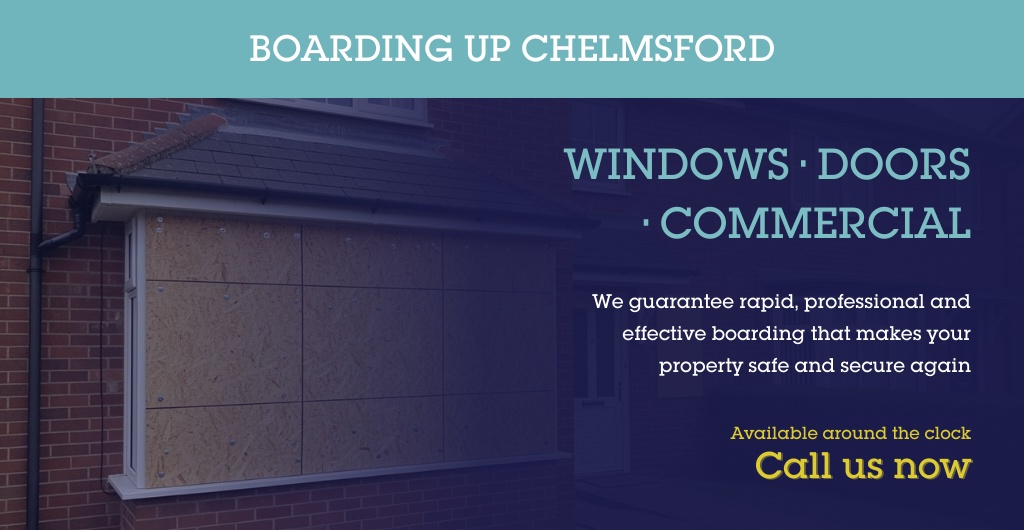
- Fit temporary boarding using appropriate materials (commonly 18mm exterior-grade plywood, or 12mm OSB for smaller/low-risk openings)
- Use anti-tamper fixings where appropriate to reduce the risk of removal from outside
- Provide time-stamped photos, an itemised invoice, and a work statement describing what we found and what we did
- Help you describe the work in plain English for your insurer (without giving legal or claims “advice”)
What we can’t do:
- We’re not loss adjusters and can’t approve cover, determine liability, or guarantee what an insurer will pay
- We can’t speak for your insurer or override their process
- For fire incidents, we can secure the property after fire damage, but smoke/odour remediation is outside our scope (we’ll focus on security and weather protection)
If you’re unsure whether you need boarding or a more robust temporary solution, we’ll talk it through on the phone and explain options before proceeding—especially if the frame is compromised.
When insurers usually expect emergency boarding (and why it matters)
In many policies, there’s an expectation that you take reasonable steps to prevent further loss. If a property is left exposed after a break-in or storm, secondary damage can happen quickly—rain ingress, pests, opportunistic theft, or further vandalism.
We’re commonly called out for:
- A smashed window after vandalism or impact
- A forced entry where you need to board up door openings while a locksmith or joiner is arranged
- A commercial unit needing a shopfront boarded up to reduce risk and meet lease/security requirements
- A rooflight or skylight breach where the priority is to make safe and reduce water ingress until permanent repairs can be arranged
For incident-led guidance, you might also want:
What documentation you’ll receive from us (typical insurer requirements)
Every claim is different, but most insurers want clarity: what happened, what was damaged, what was done immediately, and what it cost.
After we secure the property, we can provide:
- Before/after photos (often time-stamped)
- Description of the opening(s) secured (size, location, type—window/door/shopfront/rooflight)
- Materials used (e.g., 18mm exterior plywood, OSB where appropriate)
- Fixing method (e.g., anti-tamper fixings, internal battens where suitable, non-destructive approach when possible)
- Itemised invoice and date/time attended
- Work statement suitable for sending to an insurer or managing agent
If access is restricted (police presence, unsafe structure, awkward height), we note what prevented full works and what was completed to secure property safely.
How the process works (from your call to claim-ready paperwork)
1) You call and we take the essentials
When you ring 01245 945 217, we’ll ask a few practical questions so we arrive prepared:
- What happened (break-in, accident, storm, etc.)
- The type of property (home, flat, shop, industrial unit)
- What’s damaged (front window, rear door, shopfront glazing, rooflight)
- Any immediate hazards (shattered glass, exposed wiring, unstable frame)
- Whether police or emergency services are involved
We don’t quote guaranteed arrival times—conditions vary—but we prioritise urgent calls and we’ll give you a realistic ETA on the phone.
2) On arrival: assess, then make safe
We check the opening, the frame condition, and how best to secure it without creating more damage.
Typical approach:
- Remove immediate hazards where safe (loose shards, dangerous protrusions)
- Measure and cut boards for a close fit
- Fix using methods appropriate to the surface and risk level
- If the frame is too damaged for a non-destructive method, we’ll explain options before proceeding
3) You receive clear evidence for your insurer
After the job, we can send documentation promptly so you can attach it to your claim, along with any police reference number and your own photos.
If you need an overview of what boarding up is and when it’s used, see: what is boarding up?
Should you call your insurer before we board up?
Often, yes—if it’s safe and practical. But don’t delay securing an exposed opening if the property is vulnerable.
A sensible approach is:
- Call police if there’s a crime in progress, anyone is inside, or you feel unsafe.
- Take photos (if safe) of the damage before anything is moved.
- Call your insurer to notify them (they may give a claim reference straight away).
- Call us to arrange emergency boarding up and make the property safe.
If it’s late night, out of hours, or you’re worried about the property being targeted again, prioritise security first—then notify the insurer as soon as you can.
For urgent attendance, go to: 24/7 boarding up in Chelmsford
What affects whether boarding up is covered by insurance?
We can’t confirm cover, but these are common factors insurers consider:
- Cause of damage (burglary vs wear and tear vs storm)
- Whether the work was necessary to prevent further damage
- Whether costs are reasonable and evidenced
- Whether you have a crime reference number (for burglary/vandalism claims)
- Whether you used a legitimate, insured contractor (we are fully insured, and our technicians are DBS-checked)
If you’re a landlord, managing agent, or facilities team, good paperwork is often the difference between a smooth claim and weeks of back-and-forth.
Tips to keep your claim moving (practical checklist)
If you’re dealing with a break-in, accident, or smashed glazing in the CM area, these steps help:
- Keep a timeline: when you discovered the damage, when you reported it, who attended
- Record reference numbers: police incident number and insurer claim reference
- Photograph widely: close-up damage, wider context, and any signs of forced entry
- Don’t throw evidence away (e.g., damaged locks/handles) unless it’s dangerous
- Ask for itemised invoices for all emergency work (boarding, locksmith, glazing)
- Check policy excess and whether emergency works have any special conditions
If you’re unsure what the emergency work might involve, our service pages explain the methods:
Claims scenarios we commonly support (Chelmsford & CM postcodes)
We regularly assist customers across CM1–CM77 after incidents such as:
- Burglary where a rear door is forced and side windows are damaged
- Vandalism resulting in a smashed window at street level
- Storm damage where debris breaks glazing or dislodges rooflights
- Accident/impact where a vehicle strike leaves an opening exposed
- Fire damage where the structure is safe but access points need securing
If you’re managing a void, the approach can be different (more robust, longer-term security), and we’ll tell you frankly if boarding alone isn’t enough. See: vacant property boarding up
Insurance Claims FAQs (Chelmsford & CM area)
Do you provide receipts and invoices suitable for insurance?
Yes. We provide an itemised invoice and can include a clear description of the emergency works, plus supporting photos. We’re not able to guarantee what your insurer will accept, but we provide the documentation they typically request.
Can you send time-stamped photos for my claim?
We can provide before/after photos and, where available, time-stamped images. If you need something specific for your insurer (e.g., photos showing the size of the opening), tell us when you call.
Should I take photos before you arrive?
If it’s safe, yes. Quick photos of the damage before anything changes can help your claim. Don’t put yourself at risk—if there’s glass everywhere or you think someone may still be nearby, keep your distance and call the police.
What if the door/window frame is too damaged to board neatly?
It happens, especially after forced entry or impact. If the frame won’t take fixings safely, we’ll explain alternatives and what’s realistic. In some cases, a temporary steel door or a different fixing method may be more appropriate than standard boarding.
Can you deal with shopfront claims and commercial paperwork?
Yes. For commercial work we can provide clearer work statements and invoices suitable for facilities teams, landlords, and managing agents. If you have site rules (sign-in, permits, or specific access instructions), tell us at the start.
Will my insurer pay you directly?
Usually the customer pays us and reclaims from the insurer, but processes vary. If you have a managing agent or insurer instruction, let us know—where possible we’ll align our paperwork to what they ask for, without slowing down essential make-safe works.
I need the property secured out of hours—can you help tonight?
Yes. If you need emergency boarding up or a shopfront boarded up out of hours, call us and we’ll advise the next steps and give a realistic ETA. See: 24 hour emergency boarding up Chelmsford.
Get claim-ready boarding up documentation in Chelmsford
If you need to secure property after a break-in, storm, vandalism, fire, flood, or accident, we’ll make the opening safe and provide the supporting paperwork your insurer is likely to request.
Ready to get started? Call 01245 945 217 or email us for a free, no-obligation quote.
